Many residents of the street remember Allan Chappelow as a unique and somewhat eccentric individual. Toward the end of his life, his home became a centre of fascination for passers by, the all encompassing scaffolding seemingly holding the whole house together. The front garden developed into a complex layer of dense overgrowth, motorbikes and mystery.
Allan's habit of firing up his motorbike and letting it run until properly warmed up, was a reassuring indication that life at number 9 was following some kind of routine. His approach to maintaining a crumbling home sometimes involved buckets of lime, ropes and precarious balancing acts from the parapet. His eccentricity seemed expected as it was predictable.
Sadly, Allan's life didn't end predictably. His demise in 2006 brought the long held Chappelow tenancy to an abrupt end. It's a tale still shrouded in mystery.
But Allan's story is only the tip of the iceberg and shouldn't be the defining moment of the family's life on Downshire Hill. Three generations of Chappelows lived on the street leaving a lasting legacy of a creative family.
Archibald Chappelow: Artist and Advocate for Architectural Heritage
The first Chappelows arrived some time between 1910 and 1920: George Browne and Kate Chappelow, with their children Archibald, Winifred and Eric. George was a builder and decorator who owned the firm Geo. Chappelow and Son, on Charles Street, Berkeley Square.[1]
Archibald Cecil Chappelow (born 3 August 1886, died 25 September 1976)[1] was the eldest, and followed his father into the firm. Their clients included theatres, galleries, restaurants and clubs across the West End, and Archibald's eye for interiors and his talent for sketching and writing made him useful to the business.
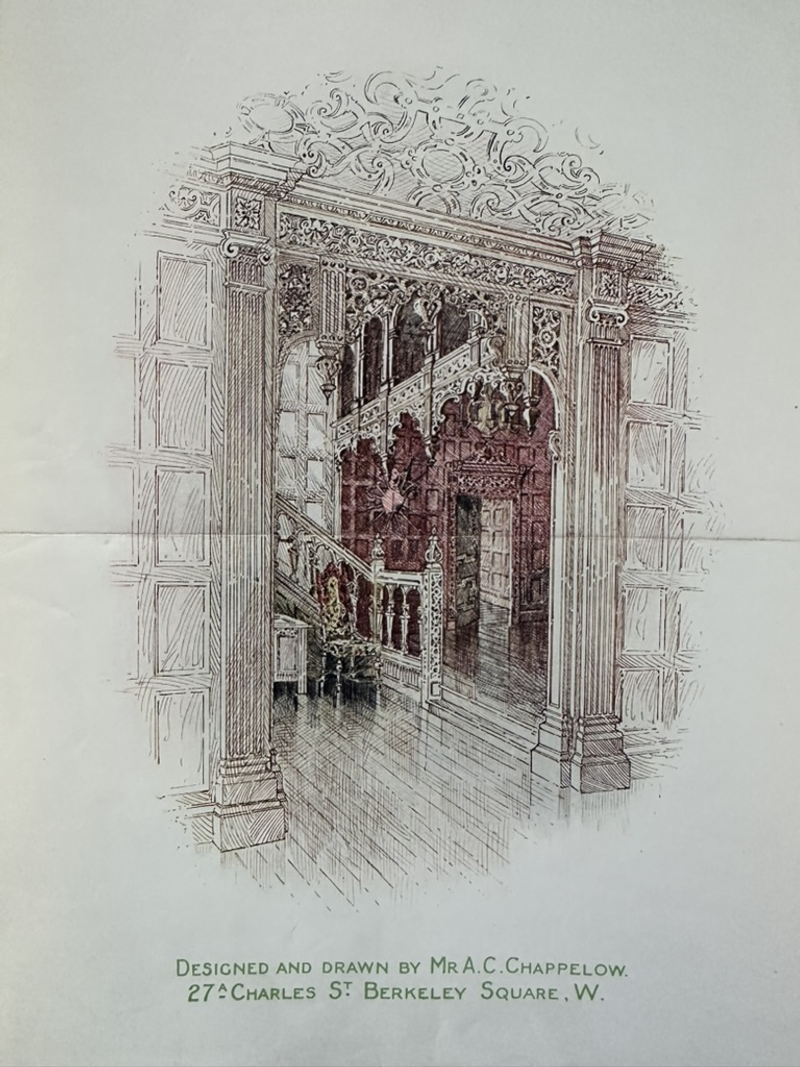
When the First World War broke out, Archibald, keen to avoid military service, moved to neutral Denmark.[1] The years there shaped him. In Copenhagen he taught at the university, including courses on antiques restoration, and on 17 November 1914 he married Karen Ragnhild Permin of Hillerød.[1] They had two sons: Paul, who was born with cerebral palsy, and Allan, born in 1919.[1]
The pen-and-ink drawings
Within six months of the war ending he was back in London with his young family, moving into his father's house at number 9.[1] It stayed the family home until 2006. Surrounded by the architecture of the neighbourhood, he began to put serious time into documenting older English buildings.
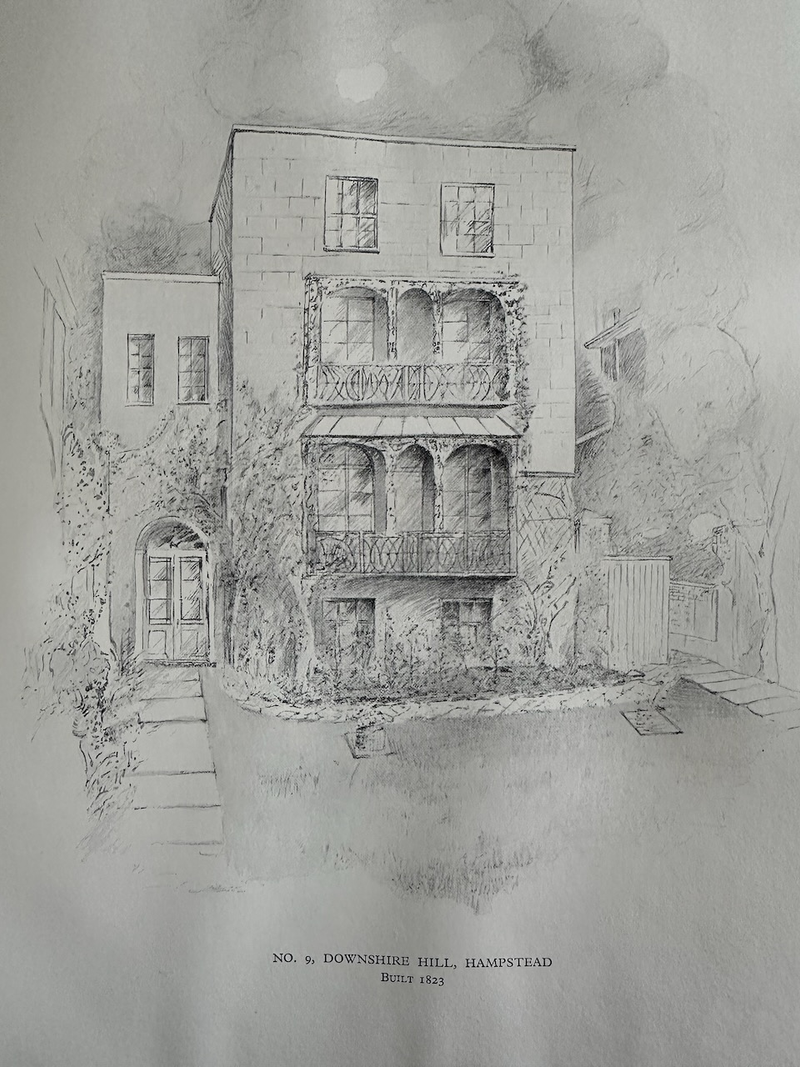
In 1921 he contributed 59 pen-and-ink illustrations to William Henry Helm's Homes of the Past: A Sketch of Domestic Buildings and Life in England from the Norman to the Georgian Age, which became his best-known work.[1][3] The Observer praised the text but said the book was "much enhanced in attractiveness by the pen-and-ink drawings by Mr. A. C. Chappelow, who has a most affectionate touch for old architecture and furnishing." The reviewer called him "a very capable artist."[1]
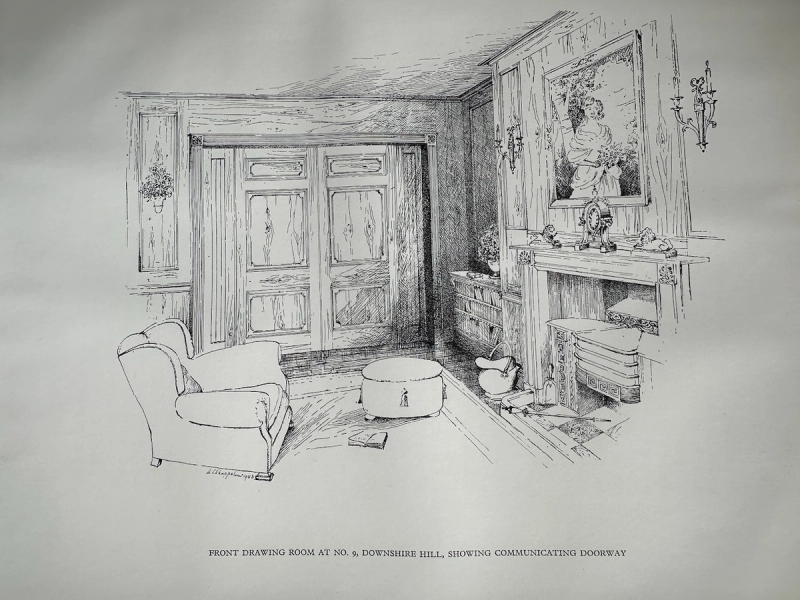
The book had a purpose beyond illustration. In 1919 Helm had written to The Times proposing "the selection and preservation of some typical houses, each of which shall be an original example of a particular period in our history."[3] Archibald's drawings were part of that argument. They made the case for conservation visually, at a point when a lot of England's older buildings were being lost.
Fellow of the Royal Society of Arts
On 10 May 1937 Archibald was elected a Fellow of the Royal Society of Arts.[1] His interest in domestic architecture never let up. In 1953 he wrote and illustrated what was essentially a companion volume to Helm's book: The Old Home in England AD 1100–1830: A Running Commentary on the Life of the Times, the Home and Its Furniture. Apollo Magazine reviewed it well.
He wrote occasional art criticism too. On 1 July 1956 he reviewed the controversial Isleworth Mona Lisa for Apollo, arguing that it should be accepted as an authentic Leonardo.[1] He thought "the face is superbly painted, and the hands more neatly defined than those in the Louvre painting" — the same eye for detail that runs through his sketches.
The family kept working in the firm, and the West End connections that had supported them for years carried on. Number 9 became more than a house. Archibald's drawings of the building and the surrounding streets are still some of the best records we have of how the place looked.
Allan Chappelow: Literary scholar and photographer
Allan moved into 9 Downshire Hill in 1933, aged fourteen. He never really left, apart from his school years at Oundle and his time at Trinity College, Cambridge (1946–1949), where he studied moral sciences, took an M.A., and was twice a Prizeman.[2]
He had his father's eye, but he worked with a camera rather than a pen. In the 1950s he was a photographer for the Daily Mail and the Daily Telegraph,[2] though his real interest was literary portraiture — writers, musicians, theatrical figures.
The Shaw connection
His most significant work was on George Bernard Shaw. In 1950, only weeks before Shaw's death, Allan visited him at home in Ayot St. Lawrence and took what turned out to be the last known photographs of the playwright.[2] (Shaw, then 94, had fallen while pruning a tree in his garden, and died of renal failure on 2 November 1950.[5]) That visit set the direction for most of Allan's later research.
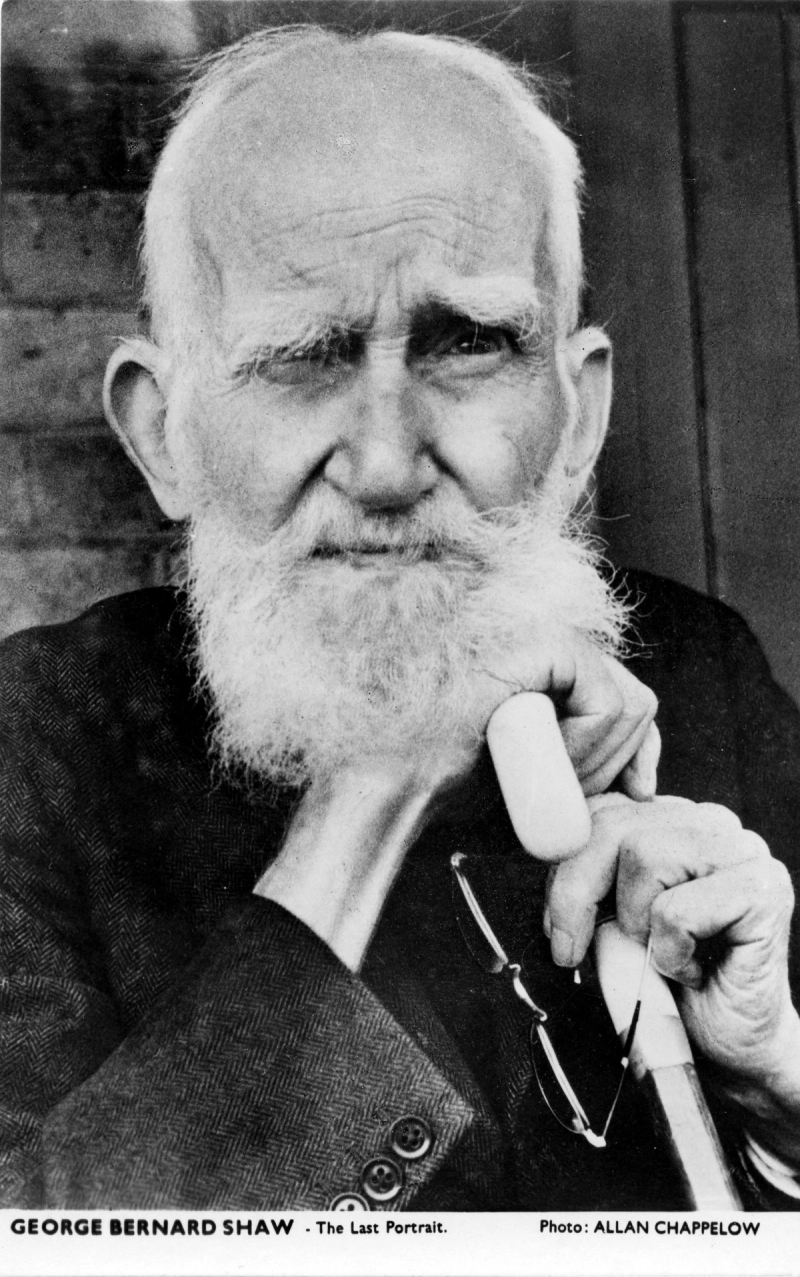
In his introduction to Shaw the Villager and Human Being: A Biographical Symposium (1962), Allan wrote: "There were two Bernard Shaws. One was the great 'G.B.S.' figure known to the general public; the other the human being — hidden by this mask or façade — whom I found to be virtually the opposite: sensitive and diffident almost to the point of shyness."
That observation underpinned his bigger Shaw books. Shaw the Villager, with a preface by Dame Sybil Thorndike, gathered reminiscences from people who had known him in village life.[2] Its companion, Shaw — "The Chucker Out": A Biographical Exposition and Critique (1969), came out of six years of research at the British Museum, with a foreword by Vera Brittain.[6] It included previously unpublished Shaw material.
Allan was elected a Fellow of the Royal Society of Arts, like his father.[2] He did postgraduate research at the London School of Economics, and studied sculpture at the Slade.
The Downshire Hill artistic community
The Chappelows were part of a wider artistic crowd on Downshire Hill through the 20th century. The street had been drawing creative people for a long time. Number 47 was the Carline family home from 1916 to 1936, and through the 1920s it was the meeting place of the Downshire Hill group, including John Nash, Stanley Spencer, Henry Lamb and Mark Gertler — a gathering Richard Carline famously painted in Gathering on the Terrace at 47 Downshire Hill, Hampstead.[4] The Dadaist illustrator John Heartfield lived at the same address between 1938 and 1943; a blue plaque marks his time there.[4]
Margaret Gardiner, at number 35, was a patron of Barbara Hepworth and Ben Nicholson, and kept a Hepworth sculpture in her garden.[4] Jim Henson, who created the Muppets, lived at number 50 and acquired 1b Downshire Hill for the Henson Creature Shop.[4] The Chappelows were on the street through most of this, across several generations.
Three generations at number 9
Archibald's illustrations documented older English architecture at a moment when a lot of it was being pulled down, and his work was part of the argument for keeping it. Allan's photographs and his Shaw research preserved a different kind of record — writers and theatre people he had watched up close.
The house, now Grade II listed, is part of that history too. Archibald's drawings of it, kept in his books, show how the family saw the place: not just as a home, but as part of the architecture they spent their lives looking at.
The Downshire Hill Residents' Association welcomes contributions to the history of the street. If you have memories or information about the Chappelow family or any other part of Downshire Hill's past, please get in touch.
—
Sources
- Archibald Cecil Chappelow — Wikipedia
- Allan Chappelow / Murder of Allan Chappelow — Wikipedia
- William Henry Helm — Wikipedia
- Living history: Downshire Hill — Downshire Hill Residents' Association
- George Bernard Shaw, 94, Dies at Home in England — The Harvard Crimson, 2 November 1950
- Shaw — "The Chucker-Out" (1969), Allan Chappelow, foreword by Vera Brittain — Routledge reissue listing